Your training. Your future.
Would you like to do vocational training in Germany? In care, skilled trades, logistics or another occupation? We support you from your first German course to your final qualification. It is free of charge for you.
This is what arriving looks like.
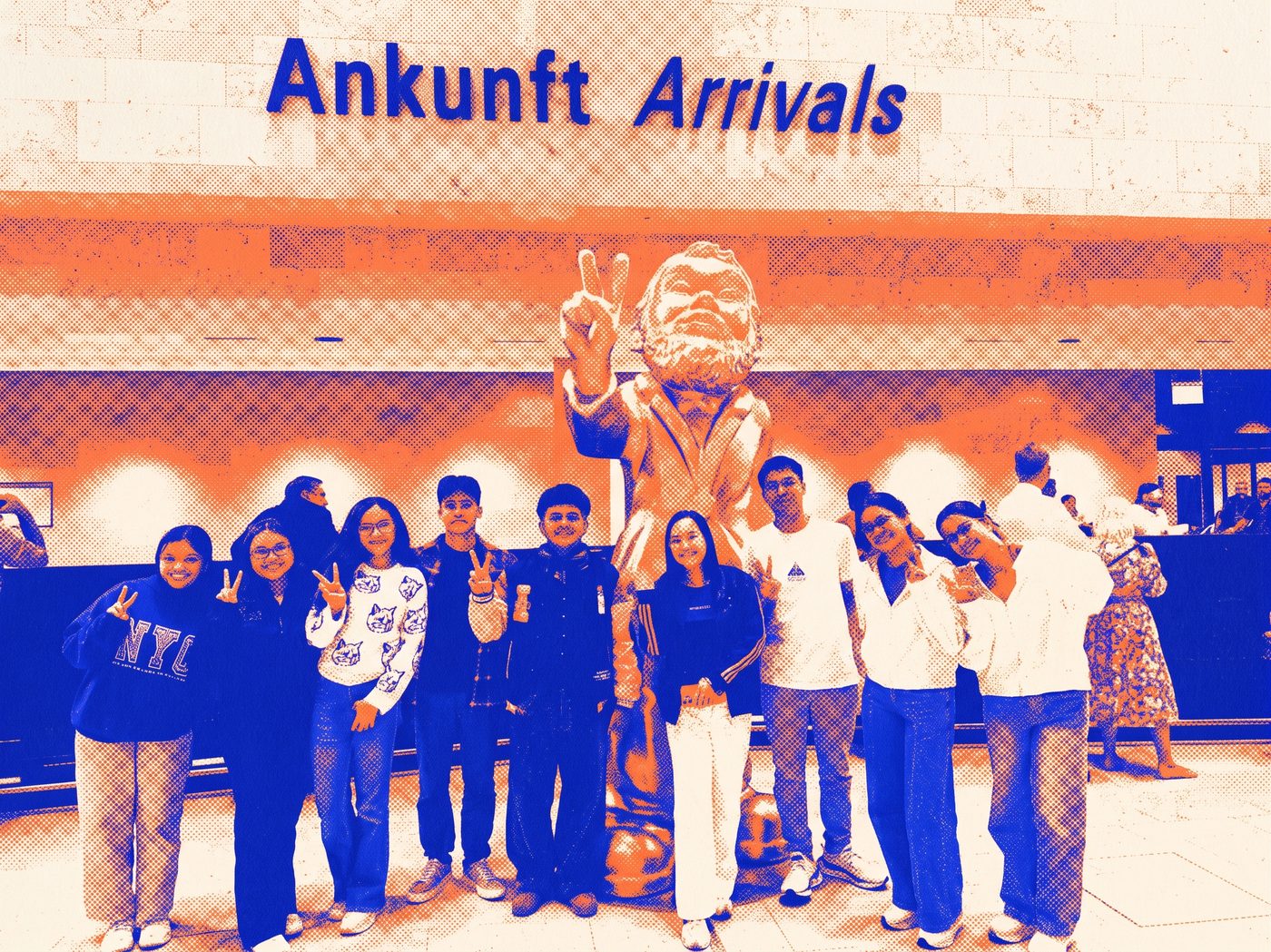
Arrived. First steps in Germany.

We pick you up. In person.
Learn. Earn. Stay.
A German qualification
You learn at the company and at a vocational school. Your qualification is valid in Germany without a recognition procedure.
Paid from day one
You receive training pay from the first month. For the visa it has to cover your living costs. We check this with the company in advance.
Stay afterwards
Once qualified, you can work in Germany as a skilled worker, often at your training company. After two years of work, a permanent settlement permit is possible if further requirements are met.
Source on the settlement permit: Section 18c(1) Residence Act, Make it in Germany.
Many occupations. One path.
Tell us what interests you and what you are good at. We find the company that suits you. Depending on the occupation, training usually takes two to three and a half years.
Care
Training as a Pflegefachfrau or Pflegefachmann (qualified nurse), three years, in hospitals, care homes or outpatient services.
Skilled trades
For example carpentry and other trades. You work with your hands and see every day what you have achieved.
Logistics
In warehousing and shipping. You learn how goods get quickly and safely to where they are needed.
Your preferred occupation is a different one, for example an office job? Get in touch. We place trainees in many other occupations too.
You are a company looking for trainees? Everything for employers is on our page for companies.
Starting well prepared.
- We recommend 12 years of school.
This way you start well prepared for vocational school and your German course. We look at your certificates together with you.
- Willingness to learn German.
We organise your German course up to B2. Your effort decides how fast you progress.
- Motivation for an occupation and for Germany.
Vocational training is a big step. If you know why you are taking it, you settle in well.
Step by step to Germany.
How long it takes until you start depends mainly on how quickly you learn German. We support you at every step.
You apply, and we get to know you personally. We talk about your wishes and the right occupation.
Before entry you learn German up to B2. We organise the course, because vocational school is taught in German.
We match you with a suitable company and take care of your visa applications.
We pick you up and help with finding housing, dealing with authorities and opening a bank account.
We stay available throughout your training, for you and for your company.
Free of charge for you.
With us, the company pays, not you. You pay no fees and sign no repayment clauses. Your contract is transparent. If something does not go to plan, please use our complaint form.
Complaint formIs nursing training right for you? Find out.
Are you interested in nursing training? This self-test helps you decide.
The Career Orientation Decision Compass was made for this, by the quality association Faire Anwerbung Pflege Deutschland. The self-test is aimed at young people from third countries considering nursing training, and helps you honestly work out whether this path suits you.
topic areas show what the training really involves: from pay and living costs to shift work, learning German and homesickness.
questions in about 15 minutes on the nursing profession, on life in a foreign country and on what this decision means for you personally.
languages to choose from, including Arabic, Vietnamese, Ukrainian and Farsi.
The result comes without a score. It shows where you feel sure and where questions remain. Save it and talk it through at your own pace.
The self-test is anonymous and non-binding. According to the quality association, answers are not stored, not passed on and have no influence on placement decisions.
It won't be easy. But it's worth it.
Learning German takes time and discipline. Vocational school is in German, and homesickness is sometimes part of it.
You walk this path with us: we are there for you, from your first course to your qualification.
Your questions. Honest answers.
What applicants ask us most often. Is your question missing? Write to us, and we will answer personally.
Application and requirements
Who can apply?
Young people who would like to do vocational training in Germany, for example in care, skilled trades or logistics. We mainly place applicants from Asia.
Which school qualification do I need?
We recommend 12 years of school. This way you start well prepared for vocational school and your German course. For some occupations, such as nursing, there are legal minimum requirements. We look at your certificates together with you.
Is there an age limit?
There is no fixed maximum age for vocational training. Just get in touch, and we will look at your situation personally.
Do I already need to speak good German?
You do not need B2 to apply. We organise your German course up to B2. How fast you progress depends mainly on your effort.
Can I choose my occupation?
Tell us what interests you and what you are good at. We find the company that suits you. Which training places are open depends on the companies we work with.
How do I apply?
Send an email to recruiting@hpstalent.de and tell us briefly which occupation interests you. We will get back to you personally.
Costs
What does the placement cost me?
Nothing. With us, the company pays for the placement, not you. You pay no placement fees.
Who pays for the German course?
We organise your German course up to B2, and it is free of charge for you.
Do I have to pay anything back if it does not work out?
No. You sign no repayment clauses with us.
German, visa and arrival
Why German at B2?
Because vocational school is taught in German. With B2 you understand lessons, colleagues and everyday life much more easily.
How long does the German course take?
That depends mainly on your prior knowledge and your effort. We support you throughout the course.
Which visa do I need?
A residence permit for vocational training. It is based on your training contract with a company in Germany. We take care of the applications.
Do I need a blocked account?
For the visa, your living costs must be covered, usually by your training pay. If it is not enough, a blocked account may be needed, for example. We clarify this with the company in advance.
Who helps me when I arrive in Germany?
We support you as you arrive: with finding housing, dealing with authorities and opening a bank account. After that, we stay available throughout your training.
Where will I live?
If you need housing, we look for it with you. Some companies also provide accommodation themselves.
Training and life in Germany
How does vocational training in Germany work?
You learn at the company and at a vocational school. Depending on the occupation, training usually takes two to three and a half years and ends with an exam and a German qualification.
What do I earn during training?
You receive training pay from the first month. How much depends on the occupation, the company and the year of training. For the visa, it has to cover your living costs.
Can I work on the side?
A side job is allowed to a limited extent. Alongside full-time training, however, there is usually little time for it.
Can my family come with me?
Family reunification is possible under certain conditions. It depends on the individual case. We are happy to discuss this with you personally.
What if I feel homesick or it does not fit?
Talk to us, as early as possible. We stay available throughout your training and look for a solution together. If training ends early, this also affects your residence status. That is why an early conversation matters.
After the training
Can I stay in Germany after my training?
Yes. With your qualification you can work in Germany as a skilled worker, often directly at your training company. If you do not find a position there, you can look for work in Germany for a period of time.
Can I stay permanently at some point?
After two years of work as a skilled worker, a settlement permit, meaning permanent residence, is possible if further requirements are met.
General information, not legal advice. In each individual case, the responsible authorities decide. As of October 2026.