Trainees who stay.
You want to train young people but can't find anyone? We bring motivated trainees from Asia to your company, for example in care, skilled trades or logistics. With German at B2 level, all applications handled by us and support until they qualify.
People who come to you.
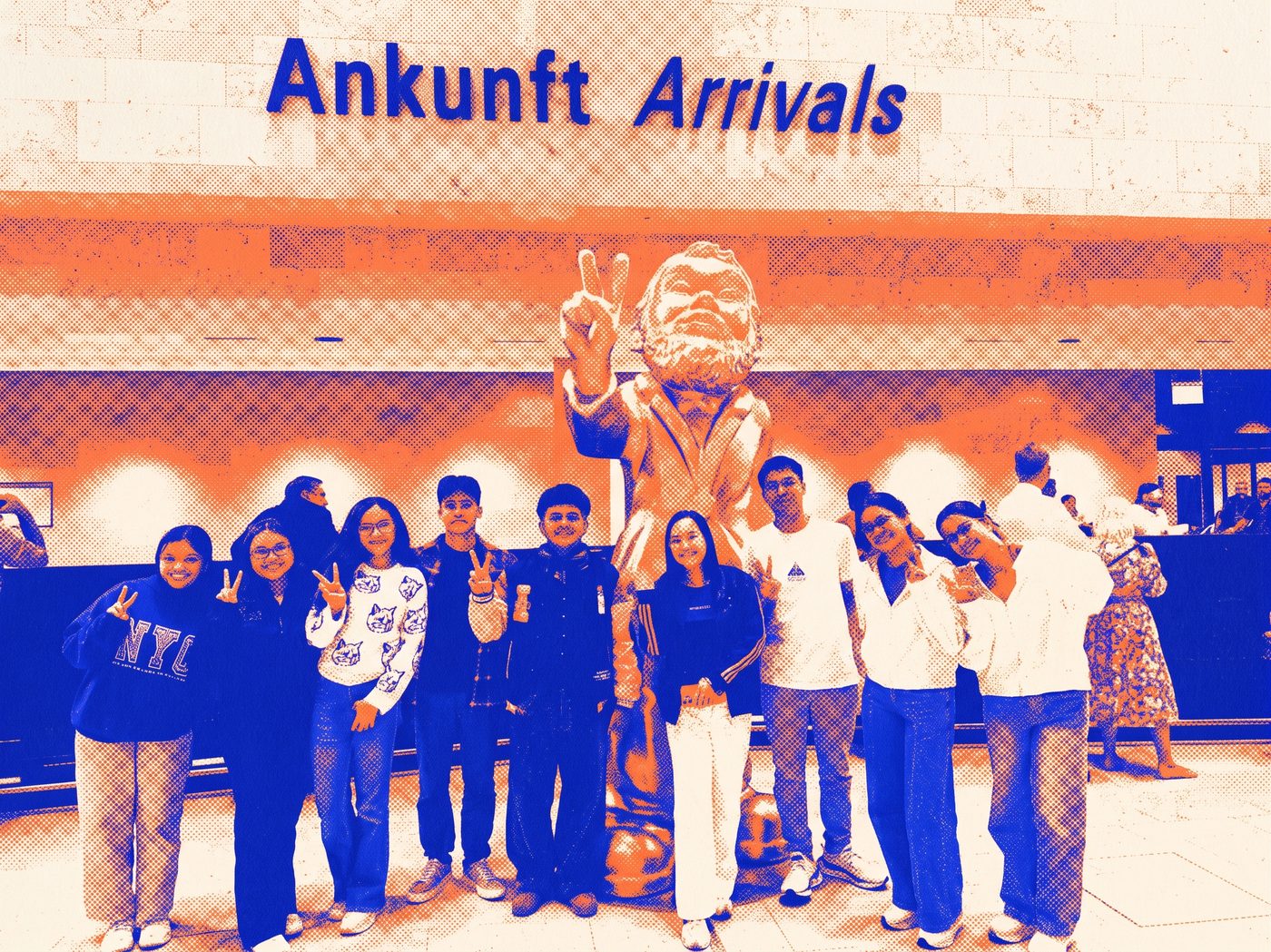


Good places. Empty places.
Many companies would like to train young people and still find no applicants. At the same time, one in four applications for vocational training in Germany now comes from abroad. We make sure these applicants reach you.
unfilled training places across Germany in 2025.
of them in skilled trades alone.
applications for vocational training comes from abroad.
Sources: BIBB, Training Market 2025 · Vocational Training Report 2026 · DIHK Training Survey 2025
Trainee today. Your skilled worker tomorrow.
A German qualification from day one
Training takes place in your company and at a German vocational school. There is no recognition procedure for a foreign qualification.
Trained the way you work
After three years your trainees know your processes, your team and your customers. They grow into your company.
Loyalty that lasts
Once qualified, the residence permit can be adjusted for employment as a skilled worker. You keep the skilled worker you trained yourself.
Your company. Your trade. Our applicants.
Care
Training as a Pflegefachfrau or Pflegefachmann (qualified nurse), generalist and three years long. For hospitals, care homes and outpatient services. Backed by more than 30 years of experience in healthcare.
Skilled trades
For trade businesses looking for new talent, for example in carpentry and other trades. Tell us who you need, and we find the right people.
Logistics
For logistics companies looking for new talent in warehousing and shipping. Your trainees learn your processes from the ground up and grow with your company.
Your occupation is a different one, for example an office job? Get in touch. We place trainees in many other occupations too.
We handle the journey. You handle the training.
What we do
- Pre-selection of candidates
- Language training up to B2
- Visa and approval from the Federal Employment Agency
- Entry and welcome on site
- Finding housing when needed
- Dealing with authorities and opening a bank account
- A contact person throughout the entire training
What you do
- Training place and training contract
- Interviews and decisions
- Training in your company
- Training pay
Six steps to the start of training.
From selection to the start of training, plan for around 3 to 6 months. Most of the work lies with us.
We talk about your company, the occupation and your requirements.
We introduce suitable candidates. You hold the interviews and decide.
A lower level is usually enough for the visa. We aim for B2 because vocational school is taught in German.
We file all applications and follow them through to the decision.
Welcome on site, housing, authorities. On day one your trainee is ready to start.
We stay available until they qualify, for you and for your trainees.
What you should know beforehand.
- The pay has to be enough.
For the visa, the training pay must reach a minimum, currently slightly above €1,000 gross per month. In nursing, collectively agreed pay is usually higher, in other trades not always. We work out together how to cover any difference before the start.
- Vocational school in German is demanding.
That is why we aim for B2 and provide a fixed contact person when things get difficult.
- You need authorisation to train.
Most companies already have it. If not, your chamber can help.
More in our overview: Apprentices from Abroad: An Overview of the Basics.
Supported. Beyond day one.


Clear terms. For you and your trainees.
For trainees
We work on the employer-pays principle. Your trainees start without debt and without repayment clauses. That protects them and means they are with you by choice.
Security
If the trainee resigns on their own within the first 18 months, we take over the new search completely, at no extra cost to you.
Clear terms
Payment only on success: 50% of the placement fee after a successful placement, 50% after the start of training.
The security applies if the trainee resigns. It does not cover dismissals by the company or cases where training ends because of problems in the working environment.
For trainees, the same principles apply as for our nurses: no costs for the trainees, no repayment clauses, transparent contracts and personal support.
Your questions. Clear answers.
Costs and contract
What does the placement cost?
Nothing for your trainees, we work on the employer-pays principle. For your company: payment only on success, 50% after a successful placement and 50% after the start of training. We discuss the exact terms openly in our first conversation.
How much work is this for us?
You provide the training, we take care of the rest: selection, language training, visa, entry, finding housing and dealing with the authorities. The training contract, the interviews with candidates and the training in your company stay with you.
Are there extra costs that come later?
We disclose all costs to you in full and in writing before the contract is signed. What is written there applies.
What do the trainees pay?
Nothing. Your trainees pay no placement fees, nothing for the German course, and sign no repayment clauses. That protects them and means they start with you by choice and without debt.
What if someone drops out?
If the trainee resigns on their own within the first 18 months, we take over the new search completely, at no extra cost to you. The details of the guarantee are set out in writing in your contract.
How high must the training pay be?
At least as high as the law or collective agreement provides for your occupation. For the visa, the pay must also cover living costs, currently a little over €1,000 gross per month. If your pay is lower, the gap can be closed, for example with a blocked account. We clarify this together before the search starts.
Selection and language
Where do the trainees come from?
Our trainees come from Asia.
How does the selection work?
First we talk about your company, the occupation and your expectations. Then we introduce suitable candidates. You hold the interviews yourself and decide who fits.
How good is their German?
Our trainees bring German at B2 level, certified before entry. The training visa usually requires a lower level. We aim higher because vocational school lessons are held in German.
What schooling do the applicants have?
We recommend 12 years of school to our applicants. For some occupations, such as nursing, there are additional legal minimum requirements. We check the certificates in advance.
Which occupations do you place trainees in?
For example care, skilled trades and logistics. Other occupations are explicitly possible. Feel free to ask us about yours.
How long until training starts?
From selection to the start of training, plan for around 3 to 6 months. The exact date also depends on when training starts in your occupation and at the vocational school.
Visa and authorities
Which visa do trainees from abroad need?
A residence permit for vocational training under Section 16a of the Residence Act. It is based on the training contract with your company. We file the applications and follow them through to the decision.
What does the Federal Employment Agency check?
For in-company training, the Federal Employment Agency approves the visa. Among other things, it checks whether your trainees are hired on the same terms as German trainees. This is an internal procedure between authorities.
What does our company need?
Authorisation to train in the occupation, a training place and pay that covers living costs. If you already train apprentices, you have the authorisation. If not, your responsible chamber can help.
Do the trainees need a recognition procedure?
Not for their occupation, because they earn their qualification in Germany. Depending on the occupation and federal state, the foreign school certificate is checked, for example in nursing. We take care of that.
Do we have to inform the authorities if training ends early?
Yes. If training ends earlier than planned, the company must report this to the immigration office. Talk to us early in that case, we will support you.
Training and everyday life
Who takes care of housing?
If housing is needed, we find it. If your company provides accommodation itself, we are happy to coordinate with you.
Who is available during the training?
We stay available until they qualify, for your company and for your trainees. There is a fixed contact person whenever something gets difficult.
What if vocational school gets difficult?
That is exactly why we aim for B2 instead of the minimum level. If it still gets tight, let us know. We look for a solution together with you and your trainees.
Is there a probationary period?
Yes. Like every vocational training in Germany, it starts with a probationary period. The same rules apply as for all other trainees in your occupation.
Can the trainees work on the side?
Secondary employment is allowed to a limited extent and must be independent of the training. With full-time training, there is little time for it in practice.
After the training
What happens after the training?
With the qualification, your trainee can stay with you as a skilled worker. The residence permit is adjusted for this, and we support the process. After two years of work, permanent residence is possible if further requirements are met.
Why trainees instead of skilled workers straight away?
Trainees learn your processes from the ground up, earn a German qualification and grow with your company over years. If you need experienced nurses quickly, our placement of qualified nurses is the right path, in the region also with our offer for Berlin and Brandenburg. Often the two complement each other.
How do we get started?
With a first conversation. Tell us about your company and your occupation, and we will tell you openly whether and how it fits.
General information, not legal advice. In each individual case, the responsible authorities decide. As of October 2026.